
Camp Pricing:
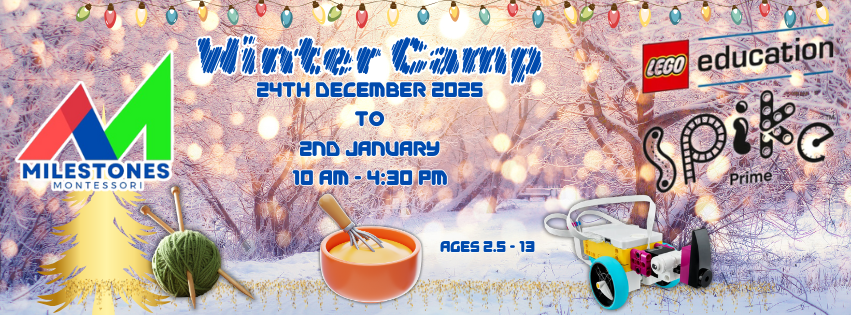
Dates: 24th Dec – 2nd January
Full Day 10 AM – 4:30 PM (6-Days): $500
Robotics Programme Only 2:30 PM – 4:30 PM: $230
This winter break, give your child a joyful and enriching learning experience where creativity, curiosity, and seasonal fun come together. Milestones Montessori’s Winter Wonder STEAM Camp blends Montessori philosophy with hands-on STEAM learning in a warm, winter-inspired environment designed to engage children across a wide age range.
🌟 A Thoughtfully Designed Winter Learning Experience
Our winter camp celebrates the magic of the season while nurturing independence, confidence, and a love of learning. Activities are developmentally appropriate, open-ended, and designed to meet children where they are — whether they are just beginning their learning journey or ready for more advanced challenges.
🤖 Robotics & STEAM Learning with LEGO
Our robotics program is built around the LEGO® Education SPIKE™ system, thoughtfully designed for young learners.
Children explore:
Early engineering and building concepts
Introductory coding through storytelling and problem-solving
Collaboration, creativity, and logical thinking
Using LEGO® components, motors, and simple coding tools, campers design, build, and test their own creations in a playful, hands-on way that aligns naturally with Montessori learning principles. Activities are adapted by age and ability, ensuring both beginners and experienced learners remain engaged and challenged.
🎨 Creative & Seasonal Projects
Winter-themed art, design, and sensory projects allow children to express creativity while strengthening fine motor skills and imagination. These projects reflect the spirit of the season without focusing on specific holidays.
🍪 Baking & Practical Life Experiences
Seasonal baking activities support Montessori practical life skills such as measuring, sequencing, coordination, and responsibility — all while enjoying hands-on, meaningful experiences in a group setting.
🧶 Knitting & Sewing Exploration
Children participate in age-appropriate knitting and sewing activities that encourage focus, patience, and dexterity, offering a calming balance to active STEAM exploration.
🌿 Montessori-Inspired Environment
Our mixed-age, nurturing setting encourages collaboration, independence, and respectful learning. Children are guided to explore at their own pace while developing social, emotional, and cognitive skills.
🎉 A Warm & Welcoming Winter Community
The camp fosters kindness, teamwork, and confidence, creating a joyful atmosphere where learning feels natural, engaging, and fun throughout the winter season.
✨ Join us for a winter camp where STEAM learning, creativity, and seasonal joy come together.
Spaces are limited — early enrollment is encouraged.