Is My Child Ready for Preschool? 8 Signs to Look For
There’s no test your child has to pass to start preschool. Readiness is less about letters and numbers and more about everyday skills: handling a goodbye, joining other children, following a simple routine. Most children show these signs somewhere between 2½ and 4.
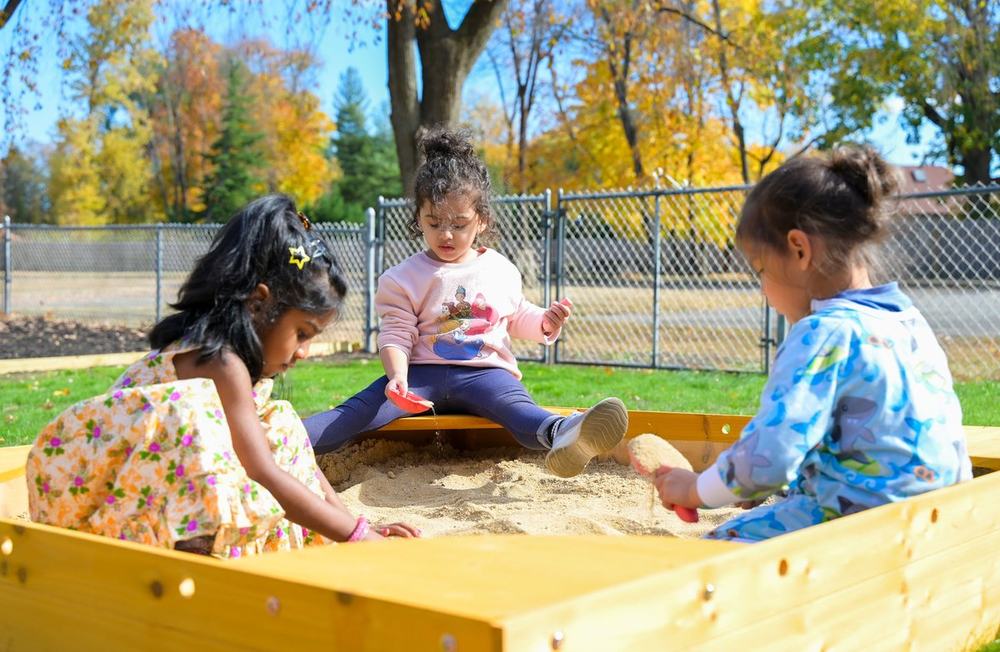
Every child grows on their own timeline, so think of these as signals, not a checklist your child has to finish. If you see several of them, your child is probably ready to start exploring a classroom.
8 signs your child is ready
1. They can handle a short goodbye
Tears at drop-off are normal. What matters is that your child can settle with a caring adult’s help. The CDC lists calming down within about 10 minutes after a parent leaves, like at child care drop-off, as typical by age 3.
Try this at home: Practice short separations with a grandparent or sitter. Always say a warm goodbye instead of slipping out.
2. They’re curious about other children
Around 2½, most children play next to other children and sometimes with them. By 3, many start joining in. Interest in other kids, even from a distance, is a good sign.
Try this at home: Visit a playground or library story time, and let your child warm up at their own pace.
3. They can follow a simple routine
If your child helps pick up toys when you say “It’s clean-up time,” or follows a two-step direction like “Put the toy down and close the door,” they’re ready for the rhythm of a classroom day.
Try this at home: Use the same words and the same order for daily routines, like getting dressed or getting ready for bed.
4. They want to do it “by myself”
Insisting on pouring their own water or putting on their own jacket is a great sign. Montessori classrooms are built around exactly that urge.
Try this at home: Give your child small real jobs: carrying napkins to the table, putting shoes on the rack, pulling up loose pants.
5. They can let you know what they need
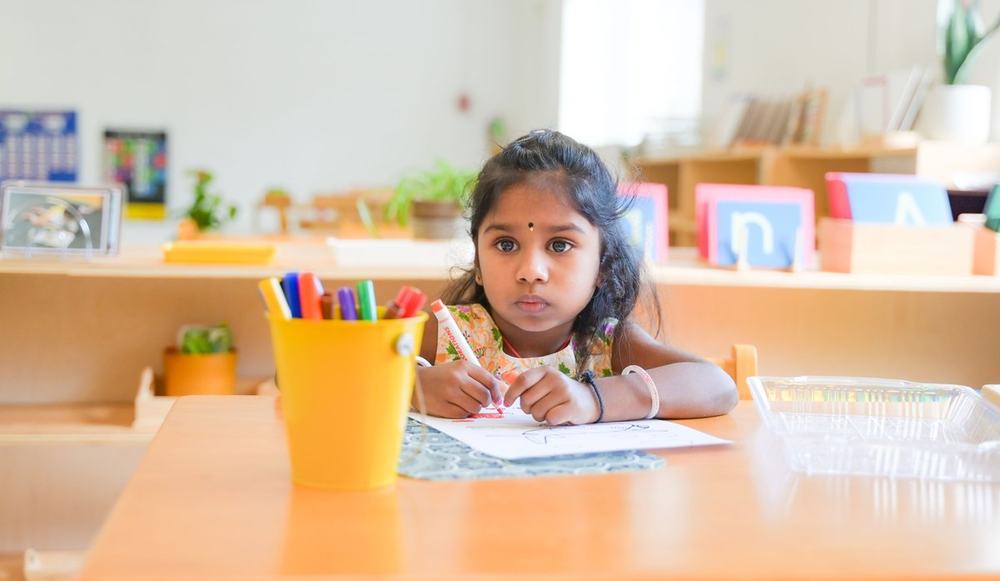
Your child doesn’t need full sentences. They do need some way, with words, signs or gestures, to tell an adult they’re hungry, thirsty, hurt or need the bathroom.
Try this at home: When your child points, give them the words: “You want water? Say ‘water, please.’”
6. They can stick with an activity for a few minutes
Turning book pages with you, stacking blocks or working a simple puzzle shows growing focus. Montessori work periods help that focus grow, a little longer each week.
Try this at home: Set out one or two activities at a time instead of a full toy box, and let your child finish without interrupting.
7. They’re full of questions
By 3, many children ask “who,” “what,” “where” and “why” questions. That curiosity is what Montessori learning runs on.
Try this at home: Answer with a question of your own: “Why do you think the leaves are falling?”
8. They have a steady daily rhythm
A school day is busy. Regular wake-up, meal and nap or rest times make it much easier for a child to enjoy the day instead of running out of steam.
Try this at home: In the weeks before starting, move wake-up, meal and nap times to match the school day.
What's typical around 2½ and 3
The CDC’s developmental milestone checklists describe what most children can do by a given age. Here are a few that connect to preschool:
| By 2½ years | By 3 years | |
|---|---|---|
| Playing with others | Plays next to other children and sometimes plays with them | Notices other children and joins them to play |
| Feelings | Shows you what they can do by saying “Look at me!” | Calms down within 10 minutes after you leave, like at child care drop-off |
| Talking | Says about 50 words and puts two or more words together, like “Doggie run” | Has a conversation with at least two back-and-forth exchanges |
| Thinking | Follows two-step instructions, like “Put the toy down and close the door” | Asks “who,” “what,” “where” or “why” questions |
| Getting dressed | Takes some clothes off, like loose pants or an open jacket | Puts on some clothes, like loose pants or a jacket |
Adapted from the CDC’s Learn the Signs. Act Early. checklists for 30 months and 3 years.
If your child isn’t doing some of these yet, that doesn’t mean something is wrong. Children develop at different speeds. If you have concerns about your child’s development, talk with your child’s doctor. You don’t need to wait.
What your child doesn't need yet
- Knowing letters, numbers or colors
- Writing their name
- Sitting still through a long group time
- A tear-free first day
Toilet learning is a common worry. Policies vary from school to school. In our Toddler Community, we support toilet learning patiently, at your child’s own pace and in step with what you do at home. Ask us about your child on your tour.
How Montessori helps a child who is almost ready
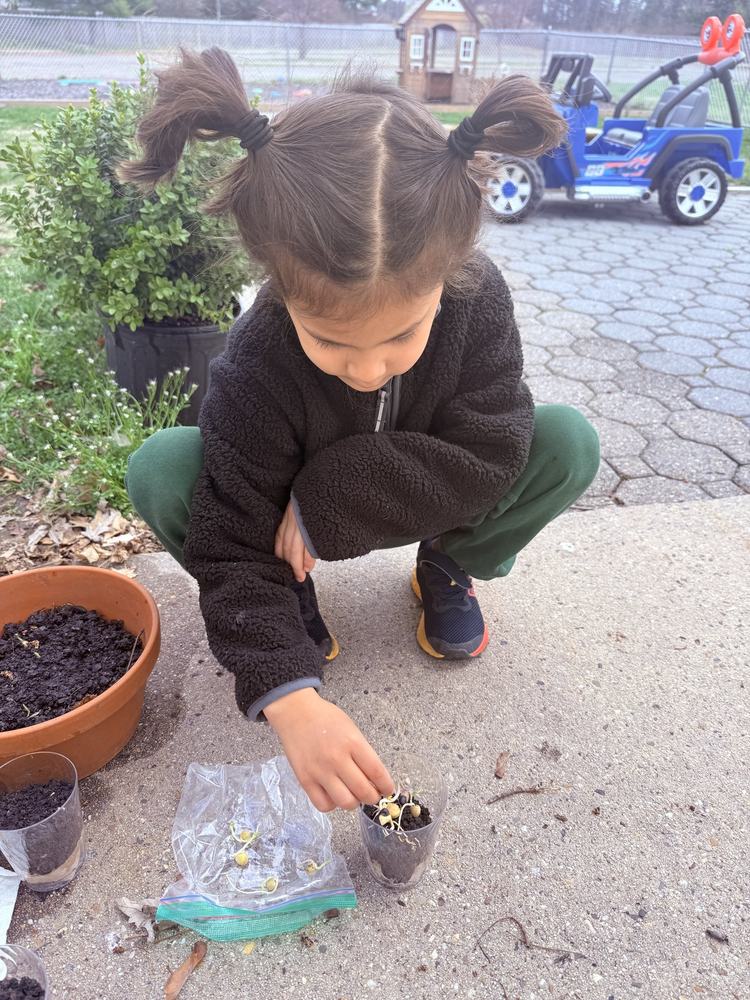
A Montessori classroom meets children where they are. First lessons are usually practical life: pouring, carrying a tray, hanging up a coat, washing hands. They build the same independence and focus on the list above.
Mixed ages help too. Younger children learn routines by watching older ones. And with our 7:1 child–teacher ratio, a teacher has time to help a new child settle in. Our founder and director, Ms. Saritha Vellore, is AMS Certified and a Registered Behavior Technician (RBT®), so she brings extra tools for transitions and big feelings.
Our enrollment process includes an observation day, so your child can spend time in the classroom before their first day.
Still not sure? That’s exactly what a tour is for. Book a free 30-minute tour with Ms. Saritha, and bring your child’s questions along with your own. Thinking about starting soon? Read Starting Montessori Mid-Year: Why January Works.