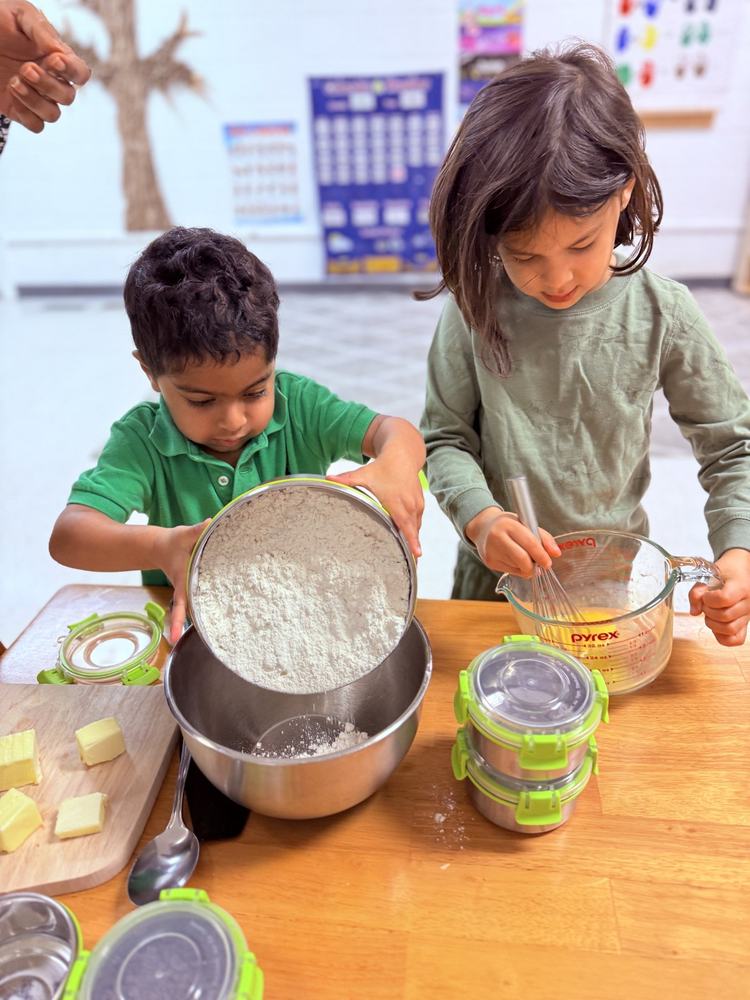
Practical Life
Real work for little hands
Pouring, sifting and preparing food: purposeful everyday tasks children love, rich with things to touch, smell and see.
Builds: concentration · coordination · independence
The heart of Montessori: a three-year cycle where children master early reading, math, science and culture through self-directed, hands-on work.
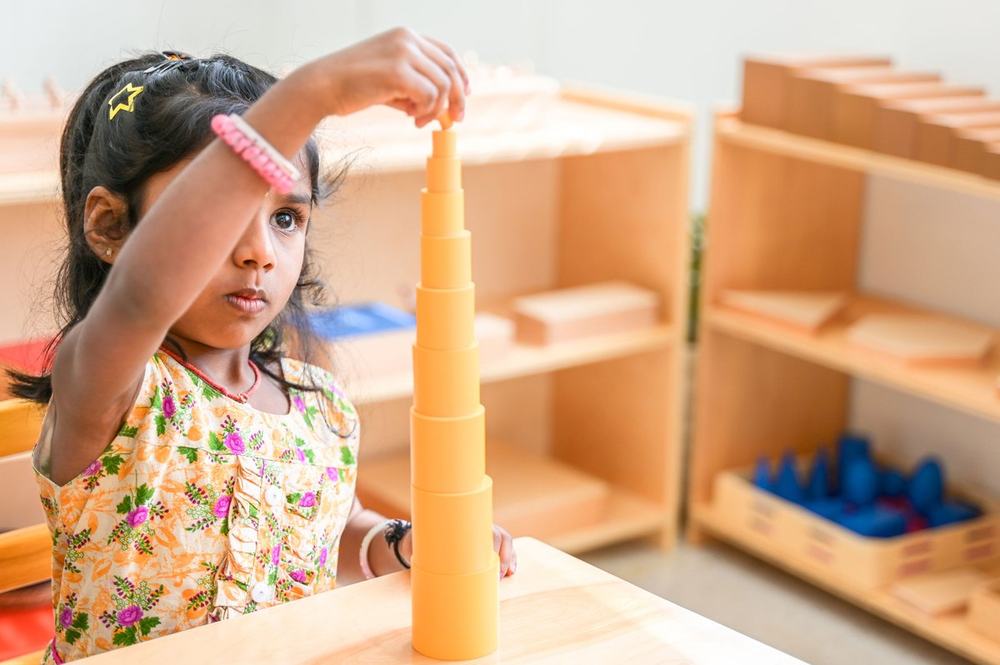
Children join the Primary Program at age 3 and stay in the same classroom through the preschool, pre-K and kindergarten years. In their third, kindergarten year, they become the classroom’s leaders and role models, helping younger friends and taking on more advanced work.
Each day includes a long, uninterrupted work period of about three hours. Children choose their own work, settle into deep concentration and discover how good it feels to finish what they start.
A look at the work children choose every day.
Pouring, sifting and preparing food: purposeful everyday tasks children love, rich with things to touch, smell and see.
Builds: concentration · coordination · independence
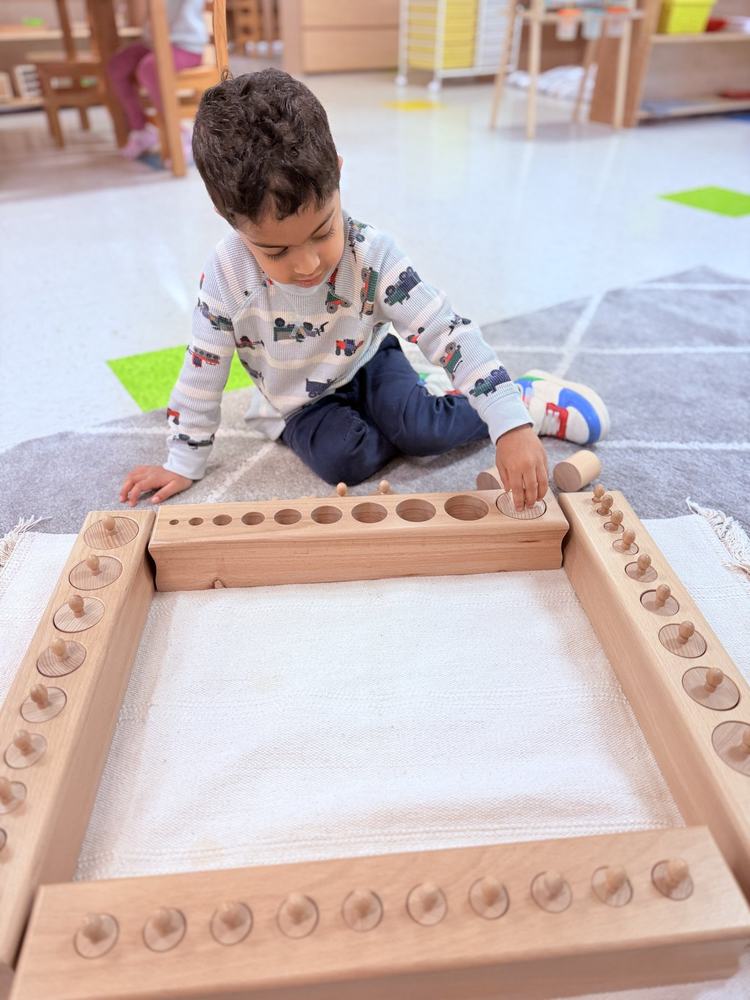
The Pink Tower and Knobbed Cylinders let children see and feel differences in size, weight and dimension, quietly laying the groundwork for math.
Builds: visual discrimination · order · fine-motor control
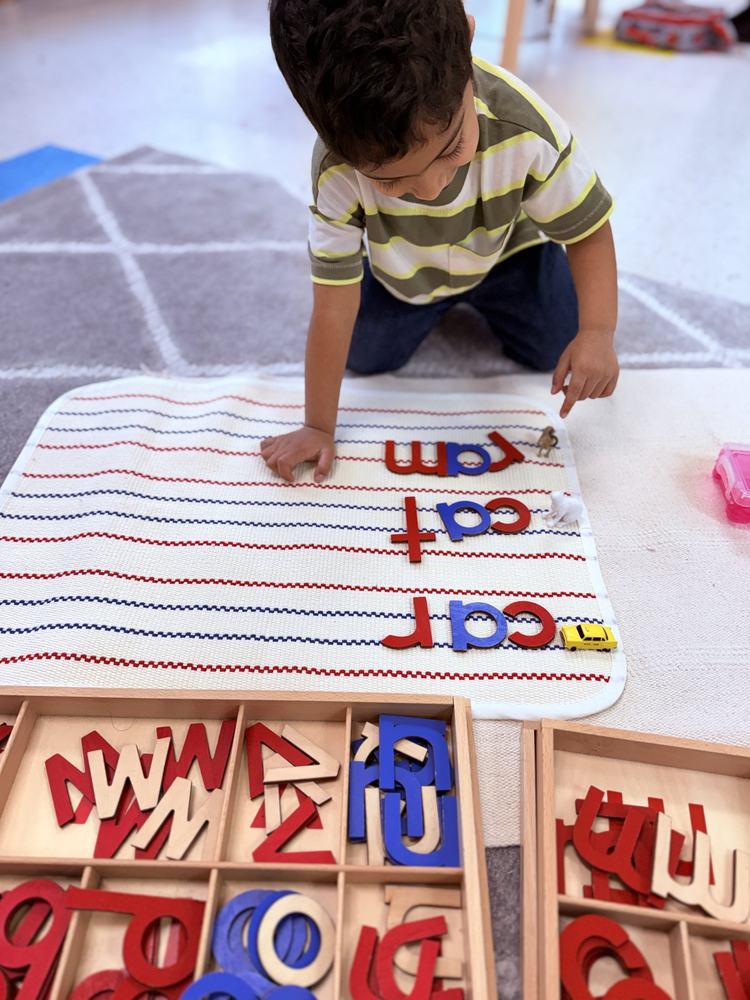
Children match objects to their beginning sounds and build words with the Moveable Alphabet, so reading and writing grow from sound and touch.
Builds: phonics · vocabulary · early reading & writing
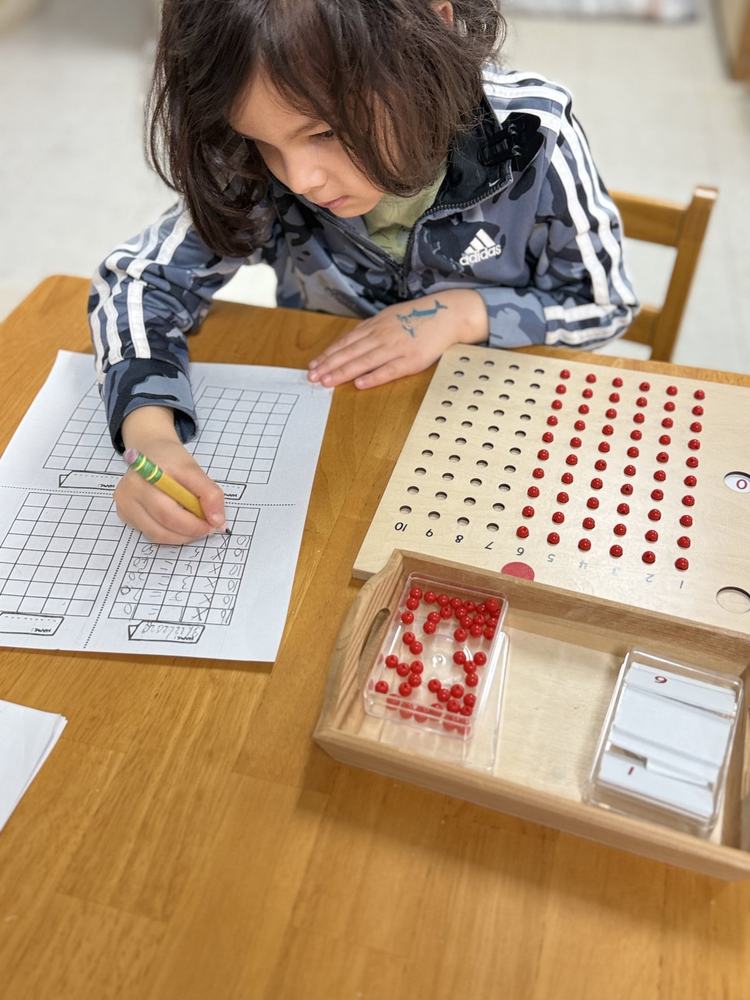
Number Rods, bead boards and golden beads turn quantity into something children can see, touch and count, moving step by step from concrete to abstract.
Builds: number sense · counting · logical thinking
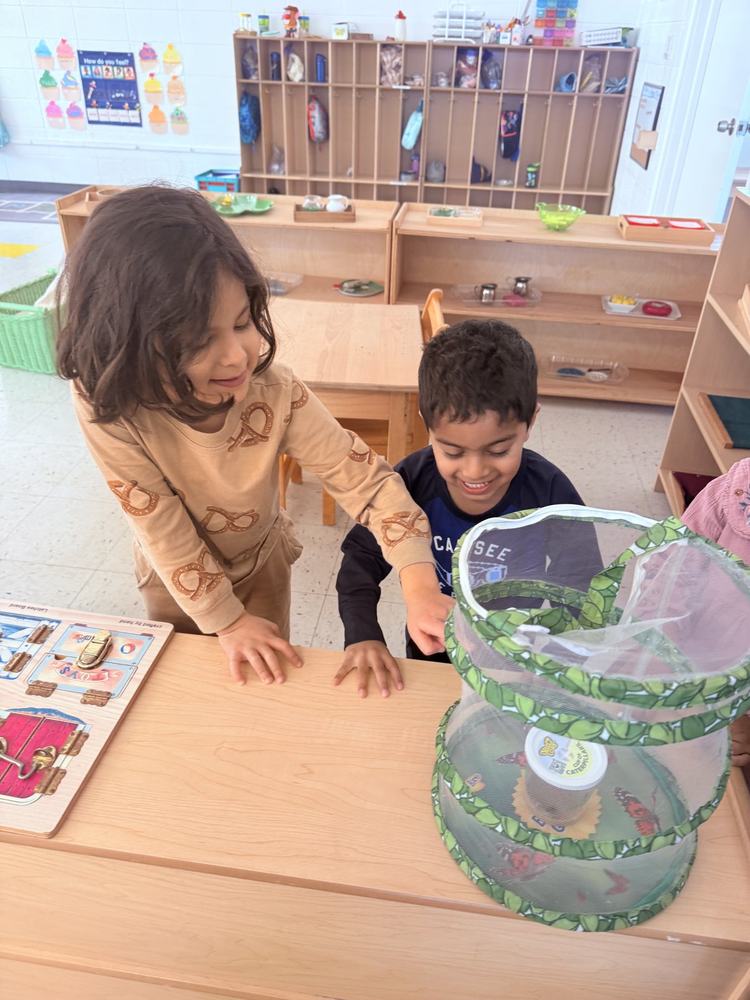
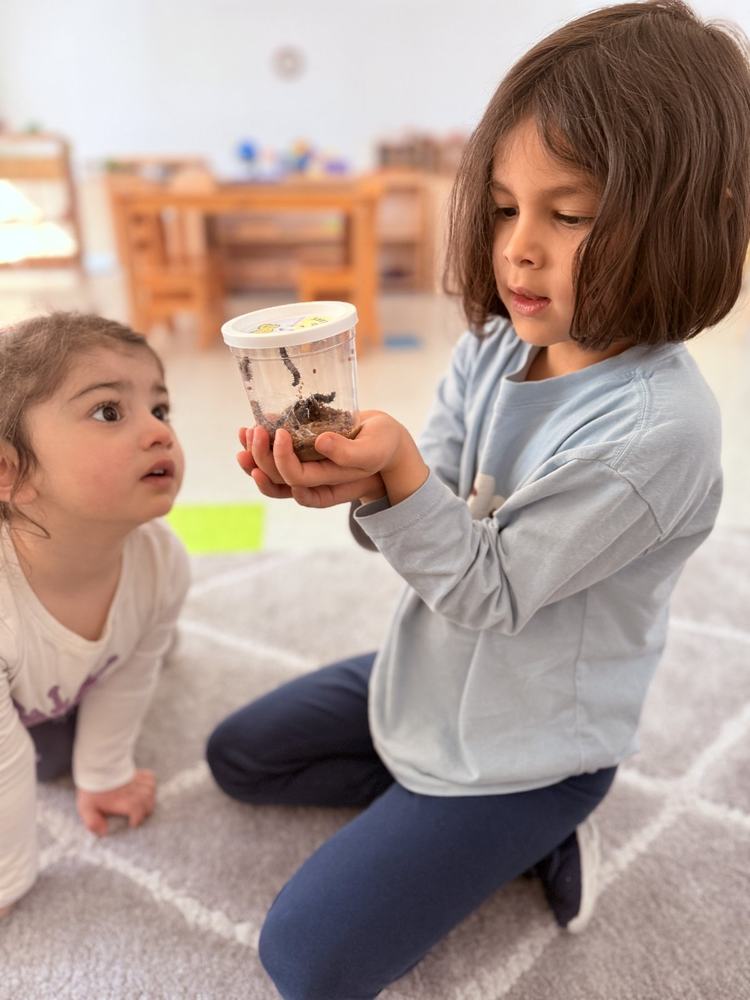
Raising butterflies, matching flags to their countries, and exploring globes, maps and botany nurture curiosity about living things, places and people.
Builds: observation · global awareness · curiosity
Lessons in greeting, waiting, helping and working through disagreements, practiced together in a mixed-age community.
Builds: empathy · patience · leadership
Book a free 30-minute tour with Ms. Saritha. Visit the classroom, ask your questions and see where your child would spend the day.