Montessori vs. Daycare: What's the Difference?
A daycare’s main job is safe, caring supervision while parents work. A Montessori preschool is an education program built on a specific method, with a prepared classroom, hands-on learning materials and trained guides. Many Montessori schools also offer full-day care, so families don’t always have to choose between the two.
The short version
Both can be wonderful places for young children. The difference is mostly in what the day is designed to do. Here is how they typically compare; individual centers and schools vary a lot, so use this as a guide for your own visits.
| Typical daycare | Montessori preschool | |
|---|---|---|
| Main purpose | Safe, caring supervision during working hours | Education through a defined method, often with full-day care alongside |
| Classroom | Play areas and toys, often arranged by the teacher for group activities | A “prepared environment”: low, open shelves of real materials children choose from themselves |
| Daily rhythm | Activities that change often, led by the teacher for the whole group | A long, uninterrupted work period (often about three hours) when children choose their work |
| Teacher’s role | Caregiver and activity leader | A trained “guide” who observes, gives short individual lessons and steps back |
| Ages together | Usually grouped by single age | Mixed ages (for example 3–6), so younger children learn from older ones |
| Learning materials | General toys, crafts and books | Purpose-built, often self-correcting materials for math, language, sensorial and practical life |
What makes a classroom Montessori
The Montessori method was developed by Dr. Maria Montessori more than 100 years ago. It treats children as capable, curious learners. A few ideas show up in every true Montessori classroom:
- A prepared environment. Everything is child-sized, orderly and within reach, so children can choose work and put it back on their own.
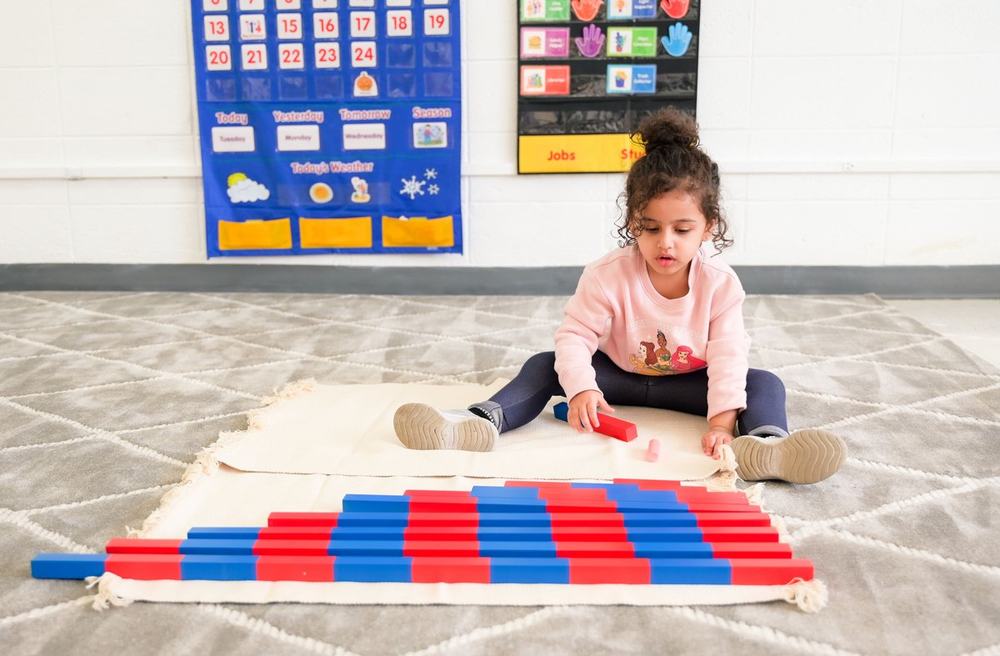
- Hands first, then head. Children touch, build, pour and trace before moving to abstract ideas. Number Rods and golden beads make quantity something you can hold; the Moveable Alphabet lets children build words before they can write them by hand.
- Long, uninterrupted work periods. Time to settle in builds real concentration, and the satisfaction of finishing what you start.
- Mixed ages. Younger children learn by watching; older children deepen what they know by helping.
- Guides, not lecturers. Teachers observe each child closely and introduce new work when the child is ready.
What daycares do well
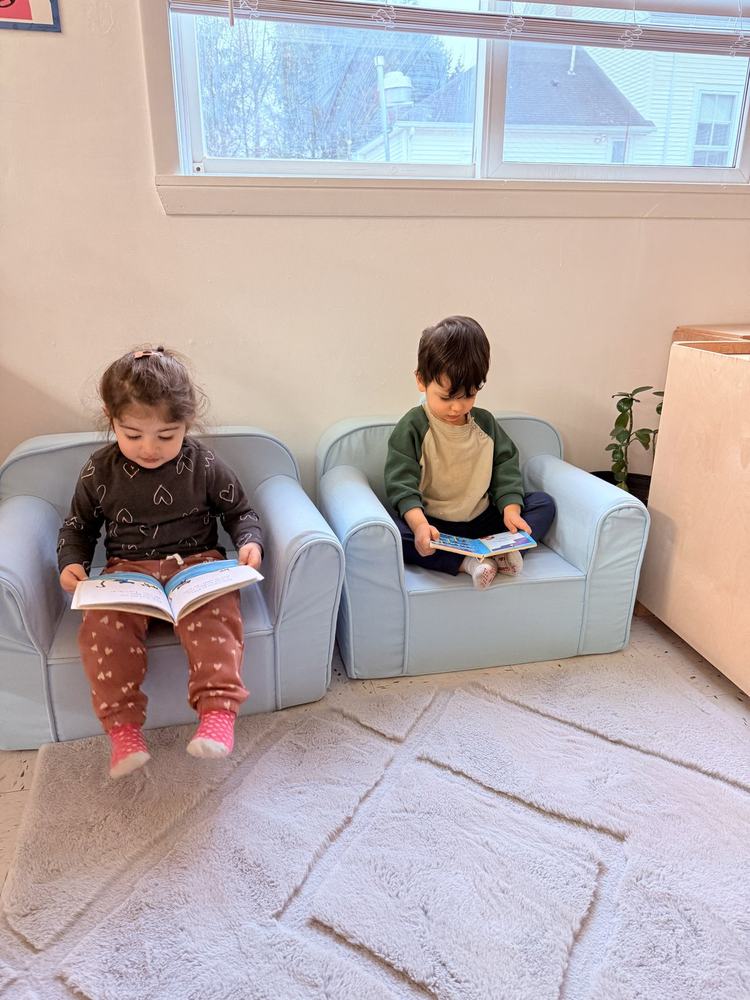
Daycare is not a lesser choice. Many centers offer long, flexible hours, care for infants, and warm, play-based programs with thoughtful early-learning plans. If you mainly need reliable care and your child thrives in a busy, social room, a good daycare may be exactly right. Quality varies from one center to the next, which is why the tour matters more than the label.
Questions to ask on any preschool tour
- What does a typical morning look like, hour by hour?
- How long can a child stay with one activity before the group moves on?
- What is the child-to-teacher ratio, and what training do the teachers have?
- How are screens used, if at all?
- How do teachers handle big feelings, transitions and new routines?
- How are children prepared for kindergarten, or is kindergarten part of the program?
- What are the hours, and is care available before and after the main day?
How it works at Milestones Montessori
At Milestones Montessori of Dayton, we bring the two together: an AMS-aligned Montessori education with care from 7:30 AM to 5:30 PM, Monday to Friday.
- The Toddler Community welcomes children ages 2½–3.
- The Primary Program is a three-year preschool, pre-K and kindergarten cycle for ages 3–6, with three-hour work periods.
- We keep a 7:1 child–teacher ratio.
- Extended care covers early drop-off and late pickup, with healthy snacks and outdoor play.
- Our founder and director, Ms. Saritha Vellore, is AMS-certified and a Registered Behavior Technician (RBT®). Meet her.
The best way to decide is to see a classroom in action. Book a free 30-minute tour, or read about tuition and enrollment.