Kindergarten Readiness in South Brunswick: How Montessori Helps
If your child turns 5 in the next year or two, kindergarten is already on your mind. Here’s what South Brunswick families need to know about timing, the skills that matter most on day one, and how a Montessori classroom builds them.
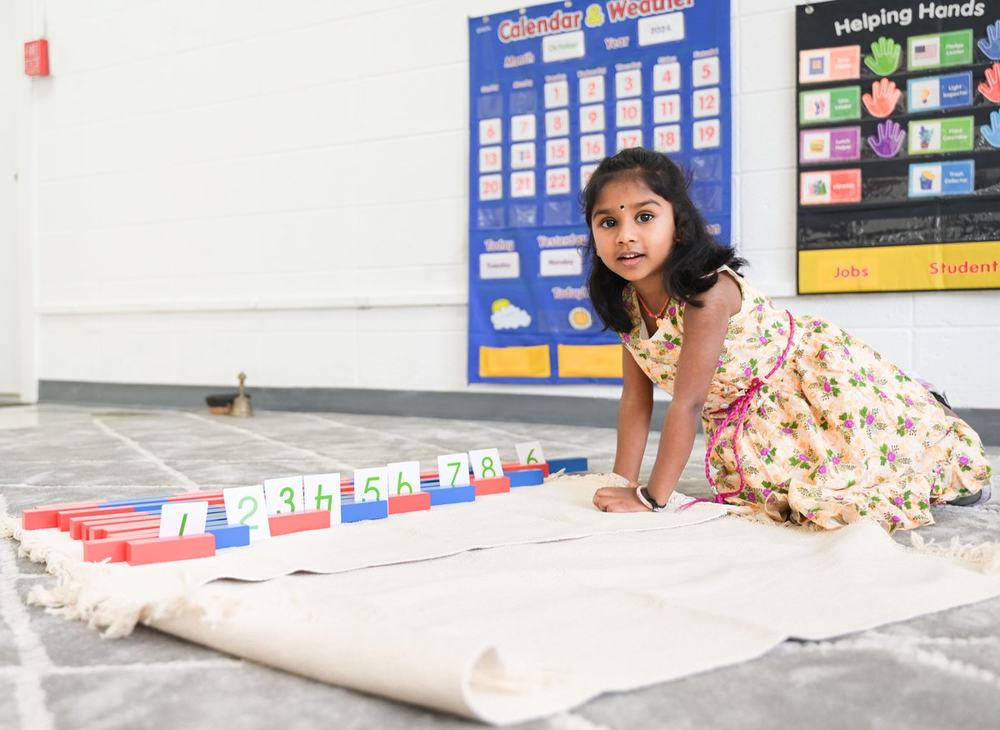
Kindergarten in South Brunswick: the key facts
Age cutoff. Under South Brunswick School District policy, a child must turn 5 on or before October 31 of the school year to start kindergarten, and the district says the rule is strictly enforced. That means:
| If your child’s birthday is between | They can start district kindergarten in |
|---|---|
| Nov 1, 2021 and Oct 31, 2022 | Fall 2027 (the 2027–28 school year) |
| Nov 1, 2022 and Oct 31, 2023 | Fall 2028 (the 2028–29 school year) |
Registration timing. In recent years, the district has opened kindergarten registration in the winter. For 2025–26, applications opened in January 2025. Watch sbschools.org for your child’s year.
What to bring. Families pre-register online, book an appointment and bring the child’s original birth certificate, immunization records, a parent or guardian ID, proof of South Brunswick residency and the district’s forms.
Live in Plainsboro, North Brunswick or another nearby town? Cutoffs and dates vary by district, so check with yours.
The skills that matter most on day one
Kindergarten readiness is less about reading early and more about being able to learn in a group. The CDC’s milestones for age 5 paint a good picture. By 5, most children:
- Follow rules or take turns when playing games with other children
- Pay attention for 5 to 10 minutes during activities like story time
- Keep a conversation going with more than three back-and-forth exchanges
- Name some letters and write some letters in their name
- Count to 10 and name some numbers between 1 and 5
- Do simple chores, like clearing the table, and button some buttons
Notice how many of these are about independence, focus and getting along. Those are exactly the skills a Montessori classroom is built to grow.
How Montessori builds kindergarten readiness
Independence
Practical-life work, like pouring, buttoning, sweeping and caring for plants, teaches children to take care of themselves and their classroom. By kindergarten, managing a coat, a lunch box and their own materials feels normal.
Focus
Our Primary Program has three-hour work periods. Children choose their work, stick with it and put it away when they’re done. That builds the attention span a kindergarten classroom asks for.
Early reading
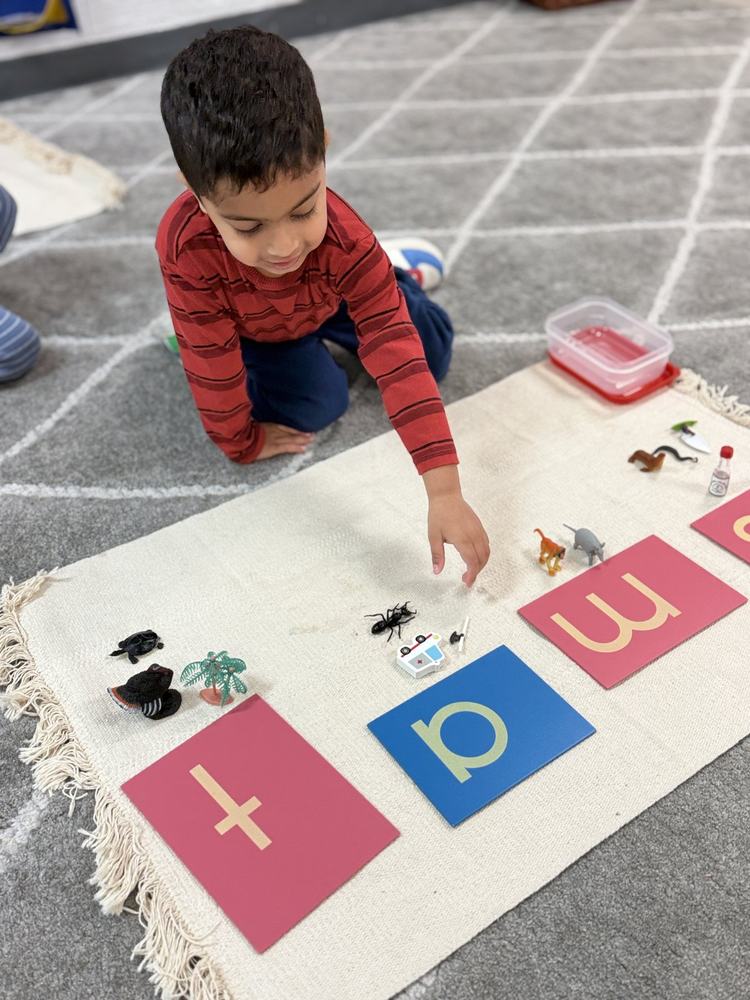
Children learn letter sounds through touch and movement, then use the Moveable Alphabet to build words before they can write them by hand. Reading grows out of that, at each child’s own pace.
Early math
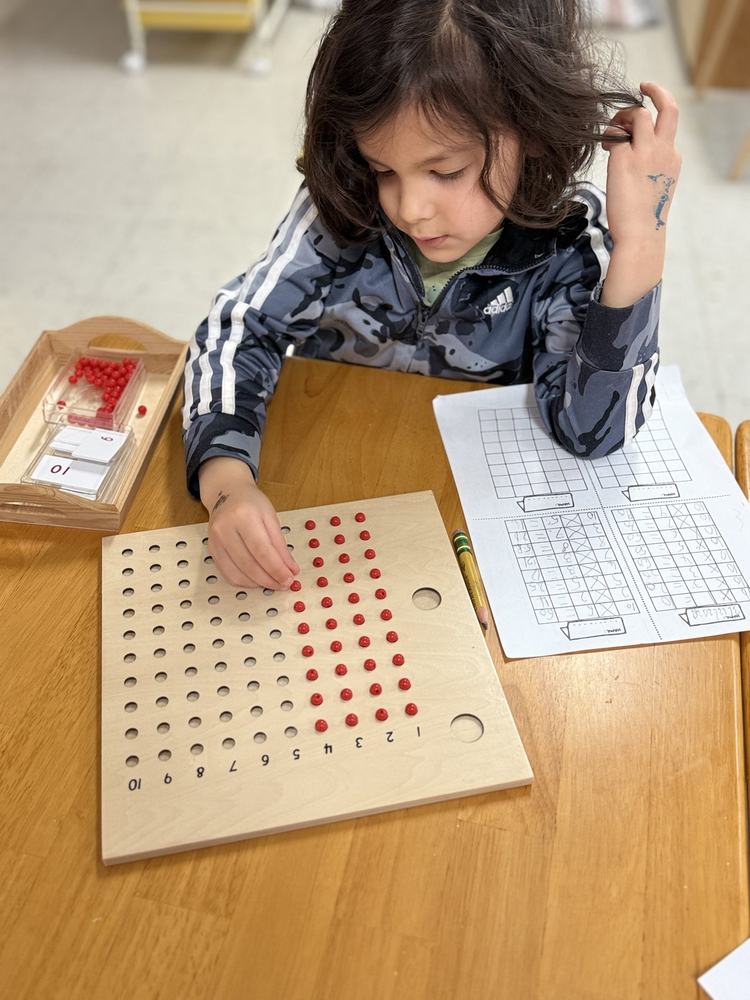
Number Rods, bead boards and golden beads make quantity something a child can hold and count. Abstract ideas like adding and place value come later, on a solid hands-on foundation.
Getting along
In a mixed-age room, children learn to take turns, ask for help and help others. Grace-and-courtesy lessons practice everyday skills like waiting, greeting a friend and saying “excuse me.”
The kindergarten year in a Montessori classroom
Our Primary Program is a three-year cycle for ages 3 to 6 that covers preschool, pre-K and kindergarten. In the third year, children are the oldest in the room. They take on more complex work and help younger classmates, which builds confidence and deepens what they know.
Families can complete the full cycle, including kindergarten, at Milestones, or move on to their district’s kindergarten. Either way, the habits a child builds here go with them. With our 7:1 child–teacher ratio, teachers know exactly where each child is and what they’re ready for next.
A simple timeline
- Ages 3 and 4: Build independence, focus and routines in preschool and pre-K.
- The fall before kindergarten: Check your district’s cutoff and decide between district kindergarten and a Montessori kindergarten year. Tours help.
- Winter: Watch for kindergarten registration and gather your documents.
- Spring and summer: Practice the everyday skills: getting dressed, opening lunch containers, using the bathroom on their own.
Want to see how our classroom builds these skills? Book a free 30-minute tour with Ms. Saritha. For younger children, read Is My Child Ready for Preschool? 8 Signs to Look For.